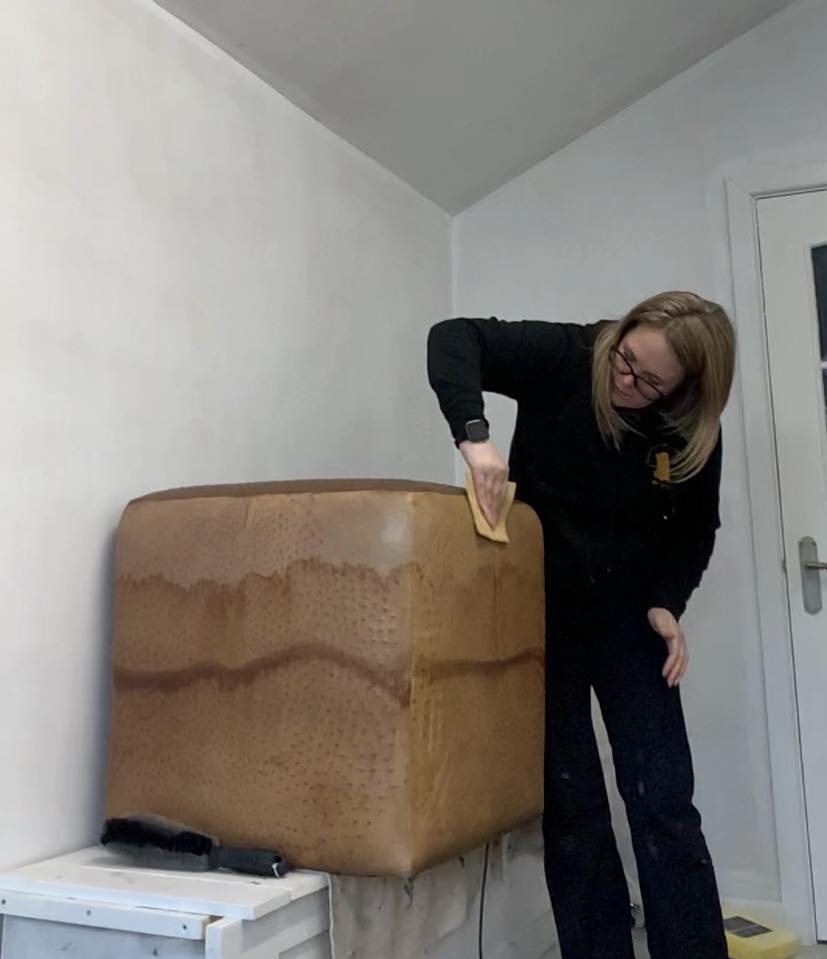
If you’re searching for a leather repair training course in the UK, you’ve probably already noticed there’s a number of options, and no shortage of confusion. Prices vary significantly and some courses are one day, some are three. Some focus on furniture, others on cars. Some give you a certificate; some give you time on real jobs.
This guide cuts through all of it. We’ll help you understand what to actually look for in a course, what the differences mean in practice, and which type of training is most likely to get you earning money fast.
What Do You Actually Want From Training?
Before comparing any course, get clear on your goal. The “best” course depends entirely on what you’re trying to achieve. Most people fall into one of three camps:
1. I want to start a leather repair business from scratch. You need more than technique. You need enough real-world experience to charge for your work confidently from day one, and ideally some support in the early days. A one-day introduction course might not cut it here; not because the skills can’t be taught quickly (they can) but because confidence takes more exposure and repetition.
2. I want to add leather repair to an existing business (cleaning, valeting, upholstery, etc.). You already understand the service trades. You know how to work in customers’ homes, price jobs, and manage expectations. What you need is solid technique and the ability to identify what’s fixable and what isn’t. A well-structured 1–2 day course is often a sensible entry point here.
3. I want to explore whether this is for me before committing. Totally reasonable. A foundation day is a low-risk way to test your interest and aptitude before spending more time or money. A one-day course will tell you whether the work appeals to you and whether you want to go further.
What Most Course Comparison Articles Don’t Tell You
The thing that rarely gets discussed when people compare leather repair courses is the difference between learning a technique and being ready to do the work commercially.
Almost any course can teach you how to apply a leather repair compound in a controlled setting. The harder thing – the thing that actually takes time to develop – is judgement. Knowing which jobs to take on and which to decline. Knowing how a repair will look in natural light versus artificial light. Knowing how long a job will actually take when you’re working in a customer’s living room rather than on a sample piece in a classroom.
This is why the number of days matters far less than what those days contain. A three-day course spent entirely in a workshop with sample pieces is not the same as a three-day course where two of those days involve working on real repairs in real customer homes. The latter compresses months of “learning on the job” into a structured, mentored environment.
When evaluating any course, ask this question: “Where does the practice happen, and on what?” If the answer is “on sample leather in a classroom,” and what you actually need is confidence building on live jobs, it won’t fully prepare you for the variability of real jobs.
The Two Main Types of Leather Repair Training in the UK
Furniture-Focused Courses
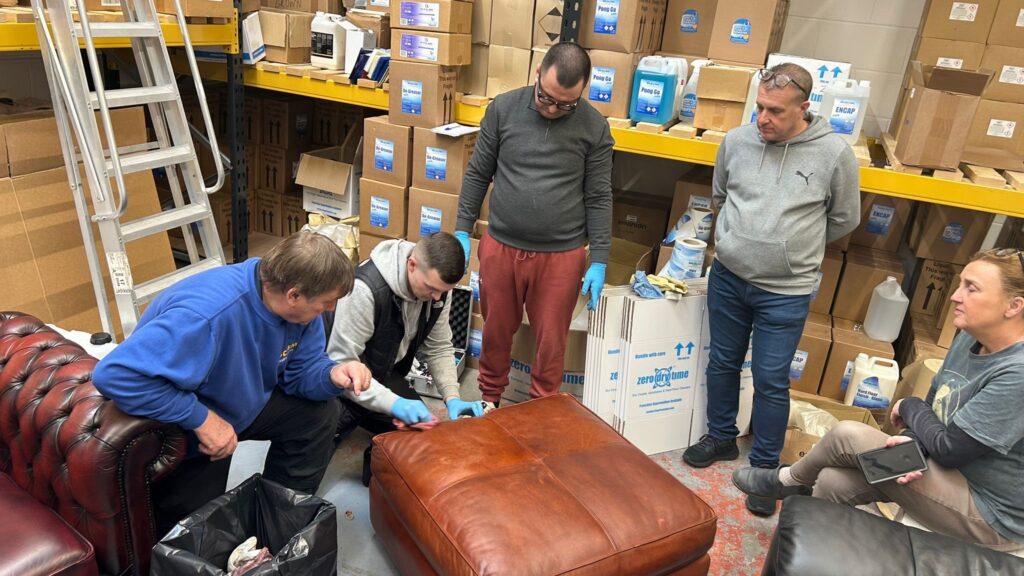
These cover leather sofas, armchairs, and other upholstered furniture – the dominant market for mobile leather repair technicians in the UK. The damage types are similar (scuffs, tears, peeling, colour loss, pet damage), but the scale of the jobs is different: a sofa repair might take two to three hours, a car seat significantly less.
Who they suit: Anyone targeting the residential furniture market, which is where the bulk of demand sits for a mobile repair business.
Automotive-Focused Courses
These are offered primarily by car detailing academies and focus on repairing leather in vehicle interiors – seats, steering wheels, door cards, and trim. The techniques do overlap with furniture repair, but the context is different: working in tight spaces, dealing with different leather finishes common in automotive manufacturing, and understanding the expectations of car owners versus homeowners.
Who they suit: Car detailers and valeters who want to add an upsell service. Not ideal if your goal is furniture repair – you’ll learn transferable skills but spend the time on automotive-specific content that isn’t your market.
Watch out for: Price. Some automotive leather courses include expensive product kits bundled into the cost, which pushes the price up significantly. That kit cost is real, but assess whether you need that specific brand’s products or whether you’d prefer to choose your own.
Comparing the Leather Academy’s Three Courses
At The Leather Academy, the course structure is built with progression, and each level adds meaningful experience, not just time.
1-Day Foundation Course
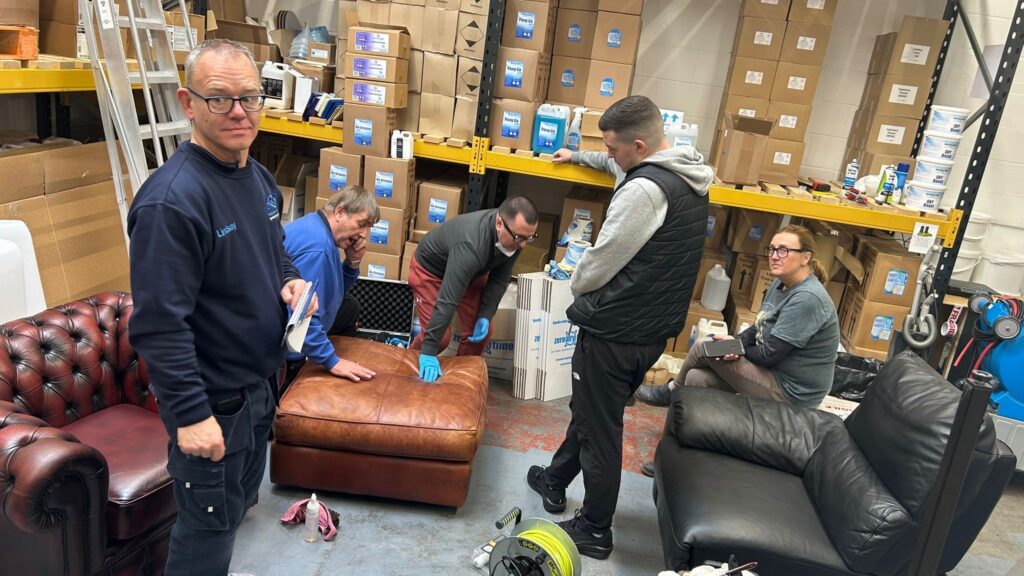
This is a workshop-based day at The Leather Academy’s unit in South Wales. You’ll cover leather identification, cleaning, preparation, surface repairs, colour matching, and the basics of quoting and job selection.
What it gives you: A solid foundation in the core techniques and workflow. You’ll leave understanding how leather repair works and having practiced the fundamentals in a controlled environment. For many trainees, the one-day course is enough for them to start their leather repair business.
What it doesn’t give you: Real-job confidence. Whilst one day is enough to enable you to start repairing leather furniture, it may not give you the confidence you need to hit the ground running.
Best for: Existing trade professionals (cleaners, upholsterers, detailers) who want to assess whether leather repair fits their business before committing further. Also a sensible choice if you’re genuinely unsure whether this is the industry for you.
Honest consideration: If your goal is to start your first service business, treat this as step one of a two-step plan.
2-Day Technician Pathway

The 2-day course builds directly on the foundation day: one day of structured workshop training, followed by one full day working on live customer jobs under mentoring.
The live job day is the key differentiator. You’re not practicing on samples – you’re completing real repairs in real homes, with a mentor alongside you. That means real variables: furniture that doesn’t look like the sample pieces, customers to communicate with, decisions to make about approach products.
What it gives you: The classroom skills of the 1-day course, plus one real-world experience day that develops the commercial judgement you need to run jobs independently.
Best for: People with no prior experience running a service business and who are serious about adding leather repair to their income; either as a standalone business or as a high-margin add-on to an existing service. One live-job day gives you experience of commercial delivery.
Honest consideration: You’ll leave with more confidence than the 1-day course, but if you’re starting from zero with no existing trade background, two live-job days (the 3-day programme) will give you noticeably more comfort when you start taking your own bookings.
3-Day Immersive Technician Programme
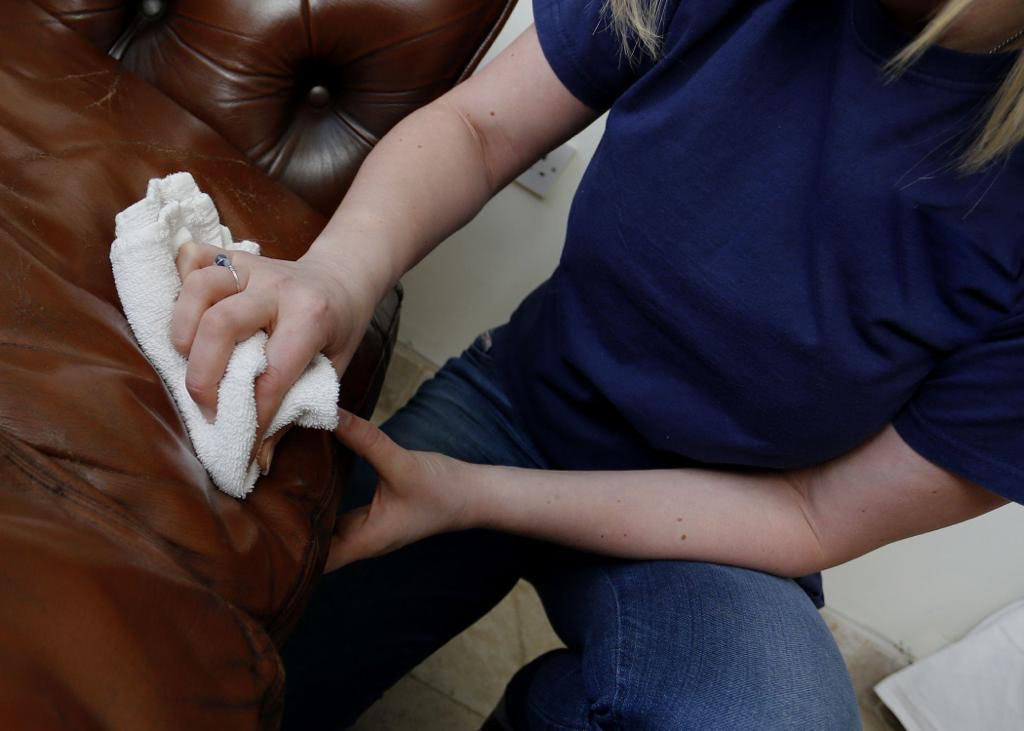
One day in the workshop, followed by two full days on live customer jobs. This is the fastest route to genuine commercial readiness.
The additional live-job day over the 2-day pathway is more significant than it sounds. The first live-job day involves a lot of observation and guided execution. The second live-job day is where confidence compounds – you’re reinforcing the process with real repetition, building speed, improving your finishing, and sharpening your judgement about which jobs to take, how to price them, and what to say to customers.
What it gives you: Two full days of real-job experience, compressed into a mentored programme – the equivalent of weeks of trial-and-error learning.
Best for: Anyone whose primary goal is to start a leather repair business. Also ideal for complete beginners who want the quickest possible route to job-readiness, and for experienced tradespeople who want to launch leather as a new income stream with confidence rather than hesitation.
Honest consideration: Availability is limited because these days are scheduled around real commercial work and mentoring capacity. Book early and expect to have a short call to discuss suitability and timing before confirming your dates.
The Question Nobody Asks (But Should)
What happens after the course?
This is arguably more important than anything else on this list, and most training providers don’t address it at all. When you’re six weeks in, you get a call about a job involving an issue you haven’t seen before – what do you do?
If your only resource is a course manual and a memory of what you covered in training, you’re exposed. If you have access to ongoing mentoring – someone with an active repair business who you can call or message – your learning curve continues long after the course ends.
This is something worth asking any training provider directly: “What support do I get after the course, and for how long?”
At The Leather Academy, ongoing support is built into the model – not as a paid add-on, but as part of how the training is designed. That matters more than it might seem when you’re quoting your first jobs and making your first mistakes.
| Your Situation | Recommended Starting Point |
|---|---|
| Existing cleaner / valetor / upholsterer wanting to add leather | 1-Day Foundation → assess, then progress |
| Wanting to start a business, some confidence already | 2-Day Technician Pathway |
| Complete beginner, want to start a business properly | 3-Day Immersive Programme |
| Just want to explore whether this is for you | 1-Day Foundation |
| Already done a 1-day course elsewhere, want real experience | 2 or 3-Day Programme |
Things to Ask Any Leather Repair Training Provider
Before booking anywhere, ask these questions:
- Is the practice on real furniture, sample pieces, or both?
- Is any training done on real customer jobs? If not, how do you bridge the gap between training and commercial confidence?
- What’s the instructor’s current experience? Are they actively running a leather repair business, or teaching from limited commercial experience?
- What support is available after the course?
- What does the price include? (Some courses bundle expensive product kits; others don’t. Neither is wrong – just know what you’re paying for.)
- What’s the group size? Larger groups mean less individual attention. If you’re paying for training, you want feedback specific to your technique.
- Is the course focused on furniture, automotive, or both? Match this to your intended market.
Final Thoughts
The Leather Academy’s structure is built around a reality that most training courses don’t acknowledge: technique is learnable in a day, but commercial confidence takes repetition on real jobs. That’s why the progression from classroom to live-work days exists – not to fill more time, but to give you something no classroom can.
If you’re serious about starting a leather repair business rather than just dabbling, the 3-day programme is the most direct route to earning. The 1-day course is a genuine option for more confident trainees, but doesn’t provide the experience of working in a customers’ home.
Have questions about which course is right for you? Call us on 0800 211 8059 and we’ll tell you honestly where we think you should start based on your experience and goals.